Mathilda Argonaut
Argonaut - Mathilda
Eine interkontinentale Expedition
Im September 2010 reist der Künstler Christian Schnurer von München über zehn europäische Grenzen nach Istanbul, der Europäischen Kulturhauptstadt 2010. Die Reise mit dem Auto dauert zehn Tage. In Istanbul wird sein „Landvehikel“ in ein ‘„Amphibisches Wesen“ vergewandelt, um den Bosporus zu überqueren. Der Künstler betritt auf der asiatische Seite der Stadt einen neuen Kontinent. Seine Reise ist zu Ende. Diese vermeintlich simple Handlung birgt eine tiefere Bedeutung.
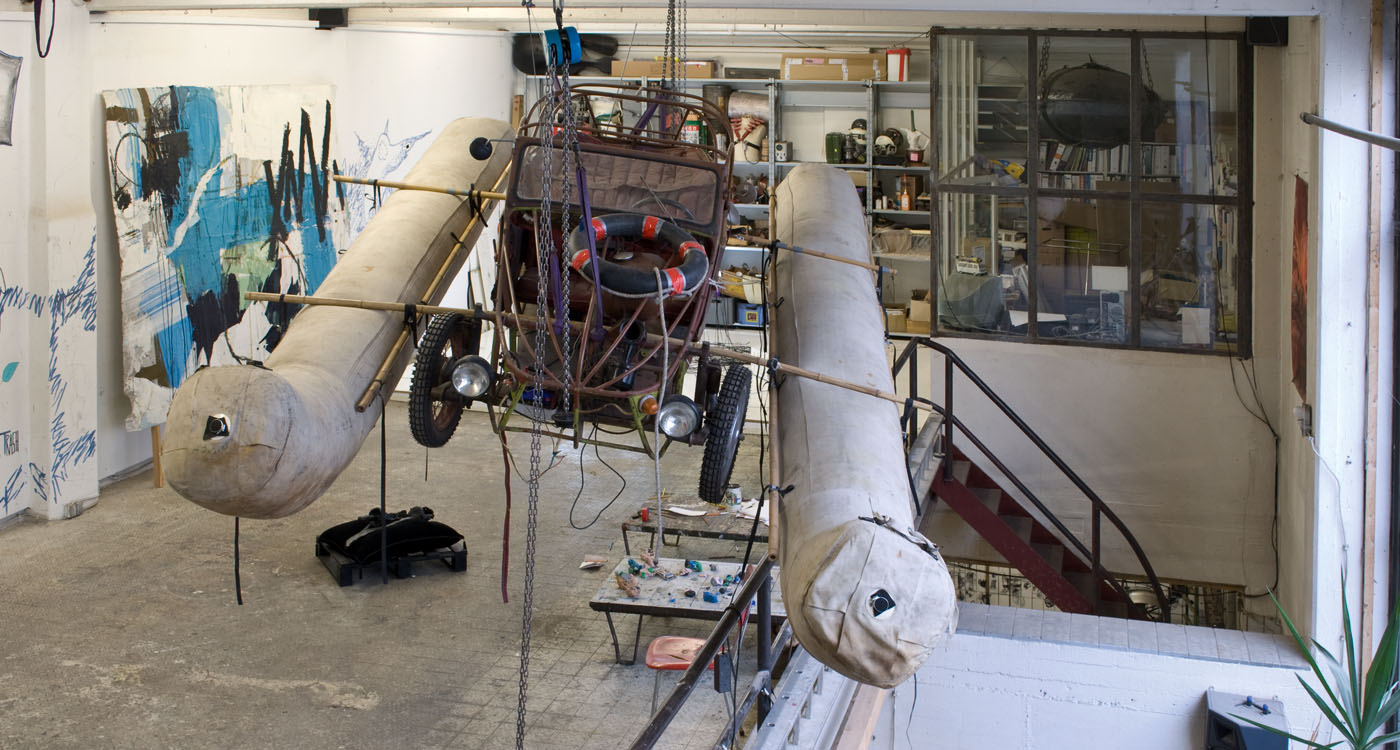
Den zentralen Punkt des Projekts bildet das Dreirad Velorex Oskar 16/350 (Baujahr 1966) und das tschechische Schlauchboot „Mathilda“. Beides sind Klassiker und verbinden sich zu einem Archetyp grenzenloser Mobilität ohne die Hybris westlicher Technologie. Die Stahlrippenkonstruktion bespannt mit gebrauchten Schlauchboothäuten erinnert an Space-Fahrzeuge oder Faltbootkonstruktionen. In einer schnellen Verwandlung wird das Auto wassertauglich indem die Schlauchbootteile daran befestigt werden.
Christian Schnurer zeichnet ein Bild, das vollkommene Bewegungsfreiheit verspricht, nicht auf der Basis von High Tech sondern auf einer sehr menschlichen und einfachen Art und Weise. Ein Hauptthema des Projektes - mehr als die technische Machbarkeit - ist das Konzept der Freiheit im künstlerischen Sinne. „Geographisch und politisch“, so der Künstler, „ist die Reise und ihr Ziel der Beweis, dass individuelle Freizügigkeit möglich ist. Auf dem Weg werden viele Grenzen überschritten und zur Seite geschoben. Grenzen die Behörden aufbauen, Grenzen zwischen verfeindeten Völkern, Sprachgrenzen , soziale Grenzen. Das ist die politische Dimension der Expedition, die mit der Bewegung im öffentlichen Raum zu einer sozialen Skulptur wird. Der Weg, der mir erlaubt ist, von München nach Istanbul über zehn Grenzen innerhalb und außerhalb der EU, kann in der Gegenrichtung nur unter größten Schwierigkeiten gegangen werden. Es sei erinnert an die vielen Menschen, die an den EU Außengrenzen scheitern und im Mittelmeer ertrinken, weil Europa sich abschottet....“
Schnurer testet die Grenzen seiner eigenen Belastbarkeit, ein Thema das sich in seinen Arbeiten wiederholt und durchleuchtet das sozial-politischen Gefüge, das die Türkei von Europa trennen. Sind sie überwindbar? Ist ein Dialog möglich? Als Künstler wischt Christian Schnurer mit seinem Projekt hypothetische Grenzen weg.
Dabei ist das Auto sein unkonventionelles Werkzeug, das sich nicht in traditionelle Disziplinen einordnen lässt. Schnurer überwindet mehr als geographische Grenzen. Er durchbricht die Trennlinien zwischen Skulptur, Aktionskunst, Video und Installation und besonders die Grenze zwischen Hochkultur und Alltag. Seine Kunst ist sowohl in heiligen Museumshallen erlebbar, als auch im wahrsten Sinne des Wortes auf dem Land und auf den Meeren.
In seiner Welt erscheint das Burleske, die Gefahr und das Unüberwindbaren, natürlich. Eine Welt ohne Grenzen oder Eingrenzung von Wahrnehmung.
Paula Domzalski
Kuratorin
Argonaut - Mathilda
An Intercontinental Expedition
As the title implies, the German artist Christian Schnurer travelled in his sculpture the “Argonaut Mathilda”, leaving Munich in September 2010, crossing ten European boundaries and arriving in Istanbul, European Capital of Culture 2010, ca. ten days later. In Istanbul, morphed the vehicle into an amphibean and crossed the Bosphorus to the Asian side – to a new continent – the final stage of his expeditional journey. This seemingly simple journey contains multiple messages.
The core element of the project is the vehicle – a 1966’s Czech, 3-wheel, Velorex Oscar 16/350 ,which provides a credible and functional image for boundless mobility sans the hubris of Western technology. Its steel ribs spanned with protective material, remind of space -vehicles or folding canoes. A relatively speedy conversion by attaching the car to a Czech dinghy “Mathilda” turns the vehicle into an amphibean, enabling it to cross over rivers and seas as a “boat car”. Geographic hindrances thus become surmountable.
Of paramount importance to the project - more so than the vehicle’s technical feasibility - are the core concepts of freedom to move across boundaries both geographical,artistic and political. „Geographically and politically“, the artist says: „The expedition to the Bosphorus is, for me, the proof that individual freedom and freedom of movement is possible. On the way, I’ll cross and push back a number of borders. Borders that are created by the authorities, borders between nations.....this is the political dimension of the sculpture, which by its movement through public space becomes in itself a social action.“ Additionally the artist is not only testing his own boundaries of endurance (a recurrent theme in his work) but is also spotlighting the socio-political boundaries dividing Europe and Turkey. Are they surmountable? Is a dialogue navigable? Turkey’s eventual EU membership and Istanbul’s current highlighted status of Capital of Culture make his choice of destination highly topical.
Artistically, Schnurer is redrawing hypothetical boundaries using his car as a tool. It is an unconventional project that defies a traditional disciplinary categorization. He is exploring a mode of representation which is intended to provoke and broaden the way viewers perceive and experience art. He not only ignores the line between sculpture, action art, video and installation but also the borders between „high art“ and the mundane everyday. His art can be experienced outside the „holy“ confines of a museum and is accessible, literally, to the man on the street.
However, Schnurer doesn’t only want to surmount geographical, and testify to, political borders. His is a world where the burlesque, dangerous and insurmountable appear natural. A world in the grand perception of things without borders or perceptual restrictions.
Paula Domzalski
Curator
Argonot - Mathilda
Kıtalararası Bir Yolculuk
Yapıtın başlığından da anlaşılabileceği üzere, Alman sanatçı Christian Schnurer “Argonot Mathilda” adındaki heykelinin içinde Eylül 2010’da Münih’ten yola çıkarak ve 10 Avrupa ülkesinin sınırlarını aşarak yaklaşık 10 gün sonra 2010 Avrupa Kültür Başkenti İstanbul’a varacak. İstanbul’a vardıktan sonra aracını suda da işler hale getirecek ve bu keşif seferinin son aşamasını gerçekleştirerek Boğaz’ı geçip –yeni bir kıtaya- Asya yakasına ulaşacak. Bunun ardından “Argonot Mathilda” ve sanatçının gözünden yolculuğu aktaran bir videodan oluşan enstalasyon şehrin merkezi bir konumunda yaklaşık 2 hafta boyunca sergilenecek. Bu ilk bakışta basit görünen eylem çeşitli mesajlar içeriyor.
Yolculuğun ana bileşeni aracın kendisi – 1966 Çek yapımı, 3 tekerlekli bir Velorex marka Oscar 16/350 model otomobil. Bu araç, Batı teknolojisinin kibirini taşımayan, güvenilir ve işlevsel bir sınırsız hareket kabiliyeti imgesi sağlıyor. Koruyucu malzemeyle kaplı çelik kaportası bir uzay aracını veya katlanabilir bir kanoyu getiriyor akla. Otomobili Çek yapımı küçük bir tekneye ekleyince, oldukça hızlı bir dönüşümle araç amfibik işlev kazanarak nehirleri ve denizleri bir “tekne-araba” olarak geçebilir hale geliyor. Böylece coğrafi engelleri aşmak mümkün oluyor.
Proje açısından fevkalade öneme sahip– aracın teknik çözümünden de önemli- temel kavram coğrafi, sanatsal ve siyasi sınırların ötesine geçebilme özgürlüğü. Sanatçının ifadesiyle: “Coğrafi ve sanatsal açıdan Boğaz’a yapacağım keşif seferi benim için bireysel özgürlüğün ve hareket özgürlüğünün mümkün olduğunun kanıtı. Yolculuk boyunca bir dizi sınırı -otoriteler tarafından konulan sınırları, uluslar arasındaki sınırları…- aşacağım ve bu sınırları geri çekilmeye zorlayacağım… bu heykelin siyasi boyutu bu, kamusal alan içerisinden geçerek heykelin kendisi, kendi içinde toplumsal bir eylem haline geliyor… Benim takip etmeme izin verilen, Avrupa Topluluğu’na dahil ve dahil olmayan on ülkeyi kesen güzergah, ancak çok daha zor şartlar altında ters yönde takip edilebilir. (Güney’den Kuzey’e) Bu eylem aynı zamanda Avrupa Topluluğu’nun dış sınırlarını aşamayan, hatta bu sınırlara varamadan boğulan insanların da anısına, çünkü Avrupa kendini giderek daha da dışarıya kapatıyor…” Buna ek olarak, sanatçı sadece kendi dayanıklılık sınırını ölçmekle kalmıyor (çalışmalarında sık sık işlediği bir tema) Avrupa ve Türkiye’yi ayıran toplumsal-siyasi sınırlara da ışık tutuyor. Bu sınırları aşmak mümkün mü? Bir diyalog rotası çizilebilir mi? Türkiye’nin Avrupa Topluluğu’na üyelik başvurusu ve İstanbul’un şu anda Avrupa Kültür Başkenti olarak vurgulanan statüsü bu yolculuğun hedefini son derece güncel kılıyor.
Sanatsal açıdan bakıldığında, Schnurer, otomobilini sanatsal araç olarak kullanarak varsayımsal sınırları yeniden çiziyor. Alışıldık kalıplara uymayan bu proje, geleneksel disiplinler çerçevesinde kategorize edilmeye direniyor. Sanatçı, izleyiciyi kışkırtmayı ve izleyicinin sanatı algılama ve deneyimleme yöntemini genişletmeyi amaçlayan bir sunum biçimini keşfe girişiyor. Sanatçı sadece heykel, performans, video ve enstalasyon arasındaki çizgiyi umursamamakla kalmıyor, aynı zamanda “yüksek sanat” ve sıradan günlük hayat arasındaki sınırları da görmezden geliyor. Sanatçının bu işi müzenin “kutsal” sınırları dışında deneyimlenebiliyor, ve bu işe sokaktaki sıradan insanın ulaşması gerçekten mümkün.
Paula Domzalski
Kuratör